
SAFE AND INTELLIGENT MUSEUM MANAGEMENT
Preserving artworks, paintings and historic artefacts in museum environments presents complex challenges, particularly because environmental conditions must remain stable while collections remain secure.
Even small changes in temperature, humidity and lighting can irreversibly damage sensitive materials, while large visitor flows can alter the microclimate within individual rooms and exhibition spaces.
Data Controls provides customised automation and management solutions for precise environmental control and effective protection of collections, using innovative technologies to optimise security, efficiency and comfort throughout museums.
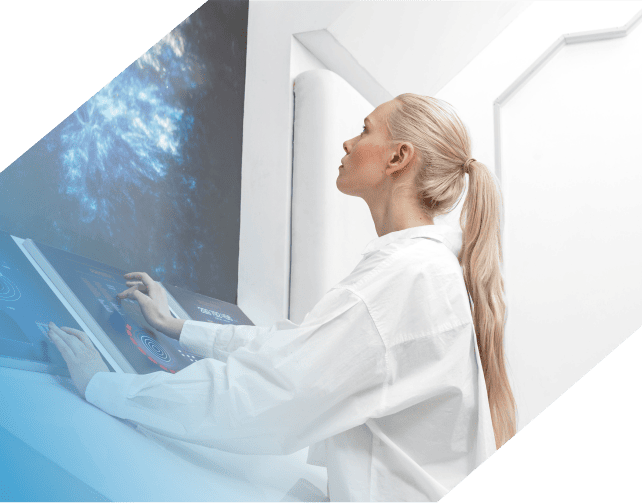

SMART AUTOMATION AND MANAGEMENT OF INDIVIDUAL SPACES
Maintaining the ideal microclimate within exhibition spaces requires precise control of humidity, temperature and lighting, all of which can vary according to visitor presence and the size of the museum.
Artworks are often sensitive even to very small environmental fluctuations and therefore require continuous monitoring to prevent deterioration.
Data Controls solutions provide real-time monitoring and control of individual spaces using automation systems such as Red5 Room, O3 Sense & Edge, UNO IAQ and Red5 O3. These systems can manage lighting, heating, humidity, ventilation and air conditioning within individual museum rooms.
Our hardware and software products form a fully connected system that improves energy efficiency while maintaining stable environmental conditions for the preservation of collections.
BENEFITS
01
02
03
MUSEUM SECURITY
Protecting artworks is a priority for every museum. Data Controls integrates advanced security technologies to monitor environments continuously and rapidly detect attempted damage or theft.
Perimeter systems combined with dedicated sensors for individual works provide highly targeted protection.
Our systems can be integrated with existing infrastructure, providing reliable continuous protection and minimising the risk of damage or loss.
BENEFITS
01
02
03
ACCESS CONTROL
Visitor-flow management in museums is important not only for security but also for preserving the works on display.
Effective access control makes it possible to monitor movement into and out of individual rooms, maintain an appropriate distribution of visitors and reduce environmental pressure on particularly sensitive collections.
Data Controls provides fully integrated management of access control, CCTV, intrusion detection, lighting and distributed HVAC through a single software platform that can also be accessed remotely.
BENEFITS
01
02
03
Contact us for more information
FAQ
How are temperature, humidity and lighting monitored and controlled in exhibition spaces to support the preservation of artworks?
The preservation of artworks depends on stable environmental conditions. Even small variations in temperature, relative humidity or lighting can trigger irreversible deterioration in sensitive materials such as paintings, sculptures, textiles, paper-based works and photographs. Data Controls automation systems continuously monitor the microclimate in each exhibition space and allow customised alarm thresholds to be defined for each environment.
Red5 Room, O3 Sense, O3 Edge and UNO IAQ devices collect real-time temperature, humidity, indoor-air-quality and lighting data. Control logic can then automatically adjust HVAC and shading systems to maintain optimal conditions even when visitor flows, seasonal factors or external conditions change. Everything can be viewed and managed through a single centralised platform.
How is access control managed in a museum with public areas, restricted storage areas and separate technical spaces?
A museum hosts many different types of users at the same time: visitors, internal staff, restorers, maintenance technicians, suppliers and security personnel. Each category has different access requirements and authorisation levels. The Data Controls access-control system allows separate profiles to be configured for each user category, with access permitted only to areas relevant to that role.
Storage areas, archives, restoration laboratories and technical rooms can be selectively protected while public areas remain fully accessible. Access time windows, temporary authorisations for restorers or external technicians and visitor credentials for special events or extended openings can all be configured. Every access event is recorded, providing full traceability of movement within the facility.
Can environmental management be integrated with existing intrusion-alarm and video-surveillance systems?
Yes. The Data Controls platform can bring environmental management, access control, intrusion detection and video surveillance into a single interface even when these systems are already installed and come from different manufacturers. This integration makes it possible to correlate different types of events in real time.
An intrusion alarm can automatically activate cameras in the relevant area; an environmental anomaly in an exhibition room can notify both the conservator and technical staff; and unauthorised access can be detected and reported within seconds. Centralised event management reduces response times, removes the need to consult separate systems and simplifies everyday museum operations.
Can the solution be adapted to historic or listed buildings where structural work is subject to restrictions?
Yes. Data Controls systems are designed to operate in architecturally protected environments where structural work may require specific authorisation or be explicitly restricted by cultural-heritage regulations.
The approach prioritises sensors and devices with minimal physical impact, gradual integration with existing systems and, where possible, wireless solutions or existing cabling infrastructure. Centralised supervision and remote plant control also reduce the need for repeated physical intervention inside the building. Every project is designed in close collaboration with conservation managers and in accordance with any requirements imposed by heritage authorities, protecting architectural constraints without compromising system performance.
How can signals from perimeter sensors, security systems and devices dedicated to protecting individual artworks be integrated?
Museum protection requires a multi-layered security strategy. Perimeter surveillance monitors entrances, exits and circulation areas, while dedicated protection for individual works — where required — can detect changes in position, contact, vibration or abnormal environmental conditions close to the displayed object. Data Controls systems integrate both layers into a single supervisory architecture.
If an anomaly occurs — whether a perimeter alarm, an artwork sensor or a critical environmental change — the system generates a localised real-time alert that is visible on the central platform and can be sent to security staff by notification. Correlating different sensor types allows the nature and severity of an event to be assessed rapidly so that the appropriate response can be activated without delay. Monitoring operates 24/7.